
Smallholder Farmers and Climate Change
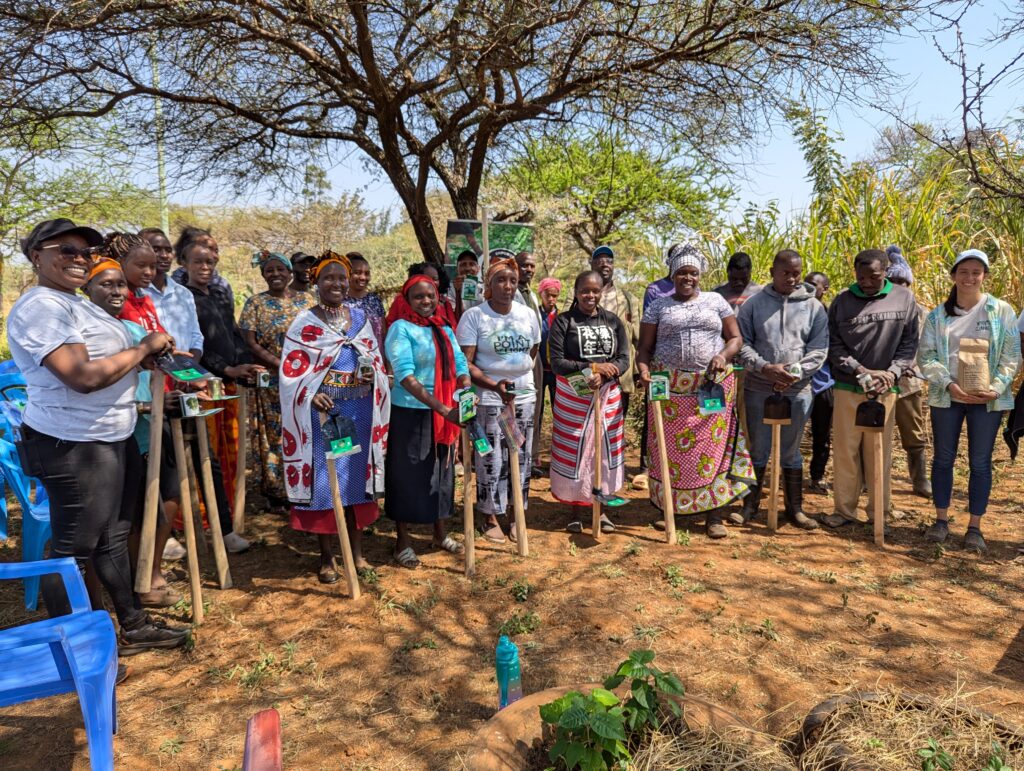
Smallholder farmers are Kenya's frontline climate warriors managing over 75% of the country's agricultural land, they sequester carbon through indigenous tree planting, restore degraded soils, and build resilient food systems that buffer communities against drought and extreme weather. Our initiative partners directly with these rural stewards to scale permaculture, agroforestry and regenerative practices, transforming small plots into powerful carbon sinks while improving livelihoods. By investing in farmer-led solutions, we're proving that local knowledge and restoration agriculture are Kenya's most effective tools for both climate mitigation and adaptation.
Smallholder Farmers and Food Sovereignty
We work alongside smallholder farmers to reclaim food sovereignty through supporting their right to save indigenous seeds, regenerate their soils, and make informed decisions about what grows in their fields and what feeds their families. Through agroforestry and regenerative agriculture training, we help farmers break dependence on external inputs and volatile markets, rebuilding self-reliant food systems rooted in local knowledge and biodiversity. Our aim is to amplify farmer-led innovation that ensures communities control their land, their harvests, and their futures.
The Climate Crisis in Kenya’s Arid and Semi-Arid Lands (ASALs) Counties
Kenya's ASAL counties face escalating climate crises, with Kajiado County exemplifying the devastation. Prolonged droughts such as the 2020/2023 disaster that killed over one million livestock, destabilized pastoral livelihoods, dried water sources, and triggered crop failures. Rising temperatures and erratic and unpredictable rainfall exacerbate food insecurity, malnutrition, and school dropouts, while pushing communities into harmful coping mechanisms.
In Kajiado, households respond to climate shocks through destocking and shrinking herds, often selling emaciated animals at crushing losses. Charcoal burning destroys indigenous trees despite warnings, accelerating land degradation. Families increasingly sell land to survive, fragmenting communal grazing areas. During extreme droughts, many skip meals or become over-reliant on relief food, with 400,000 households dependent on aid after recent droughts. These strategies erode long-term resilience, trapping communities in poverty cycles while undermining the ecological base of their survival.